
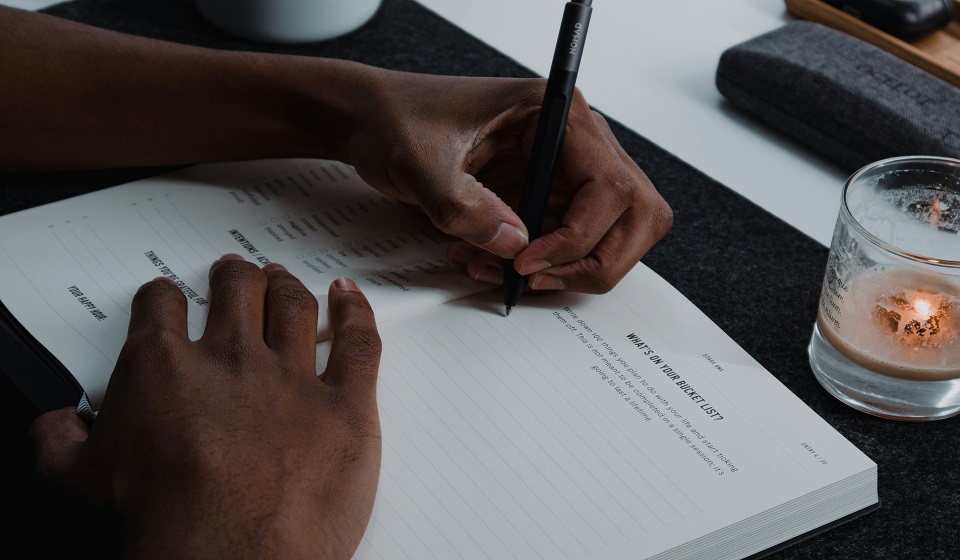
Let’s be real for a second. Have you ever started a new habit with tons of enthusiasm—only to quit a week later? 🙋♂️ We’ve all been there.
Table Of Content
- Why Most Habits Fail (And What to Do Instead)
- The 4-Step Formula to Build Positive Daily Habits That Last
- Step 1: Start Ridiculously Small (The 2-Minute Rule)
- Step 2: Anchor New Habits to Existing Ones
- Step 3: Design Your Environment for Success
- Step 4: Celebrate Small Wins (Even the Tiny Ones)
- Real-Life Examples of Positive Daily Habits That Stick
- How to Get Back on Track After Slipping Up
- Benefits of Building Positive Daily Habits That Last
- A Sample Morning Routine Using These Principles
- Common Mistakes to Avoid When Building New Habits
- Frequently Asked Questions (FAQs)
- 1. How long does it really take to build a new habit?
- 2. Can I build multiple habits at once?
- 3. What if I have zero motivation one day?
- 4. How do I track habits without getting obsessed?
- 5. What’s the #1 mistake people make when trying to create lasting habits?
- 6. Should I reward myself for sticking to habits?
- Conclusion: Start Today, Not Tomorrow
You buy the gym membership, set the 5 AM alarm, or swear you’ll meditate every morning. Then life happens. Motivation fades. And before you know it, you’re back to square one.
The problem isn’t you. The problem is your approach.
Learning how to build positive daily habits that last isn’t about superhuman willpower. It’s about working with your brain, not against it. In this guide, I’ll show you a practical, science-backed way to create habits that actually stick—without the burnout.
Why Most Habits Fail (And What to Do Instead)
We often think success is about motivation. But motivation is like a firework—it explodes brightly and then fizzles out quickly. What you really need is a system.
Here’s why most people fail when trying to build lasting habits:
- They try to change too much at once – Starting 5 habits on a Monday morning is a recipe for overwhelm.
- They rely on pure willpower – Willpower is a limited resource. By 3 PM, it’s usually gone.
- They don’t enjoy the process – If it feels like a punishment, you won’t stick with it.
- They miss a day and give up completely – One slip doesn’t erase progress.
The good news? You can fix all of these by shifting your strategy.
The 4-Step Formula to Build Positive Daily Habits That Last
This isn’t theory. This is what actually works for thousands of people (including me). Let’s break it down.
Step 1: Start Ridiculously Small (The 2-Minute Rule)
We love big goals. But our brains hate big tasks.
The secret? Shrink the habit until it feels “too easy to skip.” This is called habit stacking with the 2-minute rule.
Instead of: “I will run 5 miles every morning.”
Try: “I will put on my running shoes and walk out the door.”
Instead of meditating for 20 minutes, meditate for 1 minute. Instead of writing a chapter, write one sentence.
Once you start, momentum usually kicks in. But even if you stop after 2 minutes, you still win. You showed up. And showing up is how you build positive daily habits that last.
Step 2: Anchor New Habits to Existing Ones
Ever brushed your teeth without thinking? That’s an anchor habit. You can piggyback new behaviors onto old ones.
Formula: After [current habit], I will [new habit].
Examples:
- After I pour my morning coffee, I will write down my top 3 tasks for the day.
- After I use the bathroom, I will do 5 squats.
- After I sit down for dinner, I will take one deep breath.
This removes the need to remember. The anchor triggers the action.
Step 3: Design Your Environment for Success
Don’t rely on memory or discipline. Rely on your surroundings.
- Make it obvious. Put your yoga mat in the middle of the floor. Place your vitamin bottle next to your toothbrush.
- Make it easy. If you want to read more, keep a book on your pillow. If you want to drink water, keep a full glass on your desk.
- Make it unattractive to fail. Hide the TV remote. Uninstall social media apps (or log out after each use).
Small environmental changes create big behavioral shifts.
Step 4: Celebrate Small Wins (Even the Tiny Ones)
Most people wait for a trophy. But your brain needs dopamine—the feel-good chemical—to encode a habit as pleasurable.
After you complete your tiny habit, celebrate immediately.
It can be as simple as:
- Whispering “Nice job!” to yourself ✅
- Doing a little fist pump 👊
- Checking off a box on a habit tracker
This sounds silly, but it rewires your brain to look forward to the habit instead of dreading it.
Real-Life Examples of Positive Daily Habits That Stick
Let’s make this concrete. Here are three common goals, translated into unbreakable micro-habits.
| Big Goal | Tiny Daily Habit | Anchor + Environment |
|---|---|---|
| Get fit | Do 1 push-up after each bathroom break | Leave a yoga mat visible in the hallway |
| Eat healthier | Eat 1 piece of fruit with lunch | Put fruit in a bowl on the counter, not in the fridge drawer |
| Reduce stress | Take 3 deep breaths after waking up | Place a sticky note on your phone screen |
See how small these are? That’s the point. You can’t fail at one push-up.
How to Get Back on Track After Slipping Up
You will miss a day. Maybe two. That’s not failure; that’s being human.
Here’s what separates people who succeed from people who quit:
Never miss twice.
If you skip your workout on Monday, go on Tuesday. If you didn’t read on Wednesday, pick up the book on Thursday. One bad day is just a data point. Two bad days in a row is the start of a new, unwanted habit.
Forgive yourself quickly and restart. No guilt. No drama.
Benefits of Building Positive Daily Habits That Last
Why go through all this effort? Because the payoff is life-changing.
✅ Less decision fatigue – Habits automate your day, saving mental energy for what matters.
✅ Gradual confidence – Each small win proves you can trust yourself.
✅ Compound results – A 1% improvement every day adds up to a 37x better year.
✅ Reduced stress – When good habits run on autopilot, you stop worrying about “shoulds.”
✅ Better health & focus – From sleep to productivity, tiny habits reshape your entire life.
A Sample Morning Routine Using These Principles
You don’t need a 2-hour routine. Try this 10-minute version:
- Anchor: After my alarm goes off, I sit up immediately (no snooze).
- 2-minute habit: I drink one glass of water.
- Anchor: After I brush my teeth, I do 5 minutes of stretching.
- 2-minute habit: I write one sentence of gratitude in a journal.
That’s it. Simple, doable, repeatable.
Common Mistakes to Avoid When Building New Habits
Watch out for these hidden traps:
- Tracking too much – Focus on 1–3 habits at a time, not a 20-item checklist.
- Comparing your chapter 1 to someone else’s chapter 20 – Your journey is yours.
- Waiting for motivation – Action comes first. Motivation follows.
- All-or-nothing thinking – 10% effort is infinitely better than 0%.
Frequently Asked Questions (FAQs)
1. How long does it really take to build a new habit?
The old “21 days” myth is false. Research by Dr. Phillippa Lally shows it takes anywhere from 18 to 254 days (average 66 days) for a habit to become automatic. The key isn’t counting days—it’s consistency over time.
2. Can I build multiple habits at once?
Yes, but start with 1–2 core habits. Adding 5+ new behaviors at once drains willpower fast. Master one tiny habit, then stack another on top.
3. What if I have zero motivation one day?
That’s normal. Use the 2-minute rule: Do your habit for just 120 seconds. Most days you’ll keep going. On bad days, you still protect your streak.
4. How do I track habits without getting obsessed?
Keep it simple. Use a paper calendar or a basic app like Loop Habit Tracker. Mark an “X” each day you complete the habit. Don’t aim for perfection—aim for “better than last week.”
5. What’s the #1 mistake people make when trying to create lasting habits?
Trying to change everything at once. People underestimate how hard their brain fights change. Go smaller than you think you need to. Then shrink it again.
6. Should I reward myself for sticking to habits?
Yes! But use immediate rewards (like a high-five or a 5-minute break) instead of distant ones (“I’ll buy new shoes next month”). Your brain needs instant feedback to form a habit loop.
Conclusion: Start Today, Not Tomorrow
The best time to learn how to build positive daily habits that last was years ago. The second best time is right now.
Don’t overhaul your life by Monday. Instead, pick one tiny habit from this post. Make it so easy you’d laugh. Anchor it to something you already do. Celebrate when you finish.
Do that for one week. Then add another.
This quiet, patient approach wins every time. You’ve got this. 🌱