
Preparing for pregnancy involves more than tracking ovulation or choosing the right time to conceive. Preconception nutrition is another important part of planning because the nutrients you consume before pregnancy can help support your health and early fetal development. However, understanding which vitamins matter, when to start taking them, and how to compare supplements can be confusing.
Table Of Content
- Why Preconception Nutrition Matters
- How to Choose Prenatal Supplements
- Exploring Bird&Be’s Prenatal Options
- Complete Prenatal Pack
- Female Fertility Power Prenatal Pack
- Pricing, Convenience, and Value
- Pros and Cons of Prenatal Supplements
- Frequently Asked Questions
- When should you start taking prenatal vitamins?
- Can prenatal vitamins improve fertility?
- Is folic acid the same as folate?
- Should you take iron before pregnancy?
- Are Bird&Be supplements suitable for everyone?
- Conclusion
A balanced diet provides many essential nutrients, but certain vitamins may require additional attention when planning a pregnancy. Folic acid, iron, vitamin D, choline, and omega-3 fatty acids all have different roles in the body. Bird&Be offers prenatal supplements and reproductive wellness products designed for different stages of the journey. Learning about these nutrients first can help you evaluate available options and choose a routine that suits your needs.
Why Preconception Nutrition Matters
The period before pregnancy provides an opportunity to review your diet, identify possible nutritional gaps, and discuss health concerns with a qualified healthcare professional.
The CDC recommends 400 mcg of folic acid daily for people who could become pregnant to help reduce the risk of neural tube defects.

Other nutrients also contribute to nutritional health:
- Iron: Supports hemoglobin production and oxygen transport throughout the body.
- Vitamin D: Helps the body absorb calcium and maintain healthy bones.
- Choline: Supports normal cell function and fetal development during pregnancy.
- Vitamin B12: Helps maintain healthy nerve cells and red blood cell production.
- DHA: An omega-3 fatty acid important for fetal brain and eye development.
Your nutritional requirements depend on factors such as your diet, existing deficiencies, medications, and medical history. Supplements should complement a balanced eating pattern rather than replace nutritious meals.
How to Choose Prenatal Supplements
Choosing prenatal vitamins is not simply about finding a product with the longest ingredient list. A useful formula should provide relevant nutrients in appropriate amounts for your stage of pregnancy planning.
Start by checking the supplement facts label. Look at the amount of folic acid, iron, vitamin D, vitamin B12, and other nutrients included per daily serving. Some products contain several capsules or separate nutrient supplements in one daily pack.
Next, consider your existing routine. If you already take a multivitamin or individual supplements, adding another formula could cause unnecessary duplication. Excessive intake of certain vitamins and minerals can be harmful, so review combined amounts with a healthcare professional.
You should also consider dietary preferences, allergies, capsule size, serving instructions, and cost. A supplement that fits your routine is easier to take consistently, but convenience should never outweigh ingredient suitability.
Exploring Bird&Be’s Prenatal Options
Bird&Be offers products for people trying to conceive, those who are pregnant, and individuals navigating postpartum recovery. Its range includes prenatal vitamin packs, fertility-focused formulas, and other reproductive wellness products.
The brand uses daily sachets to organize multiple supplements into a convenient routine. According to its product information, its formulas are developed with reproductive health professionals, and its products undergo third-party testing.
Here are two options worth comparing according to your needs.
Complete Prenatal Pack
The Complete Prenatal Pack is intended for pregnancy and includes daily essential nutrients, algae-derived DHA, and iron. Its listed ingredients include folic acid, methylated folate, choline, and vitamin B12.
This option may be relevant if your priority is prenatal nutritional support. Compare the label with your existing supplements and ask your healthcare professional whether the included amounts meet your individual requirements.
The most appropriate choice depends on your circumstances, not simply on how many ingredients a formula contains.
Female Fertility Power Prenatal Pack
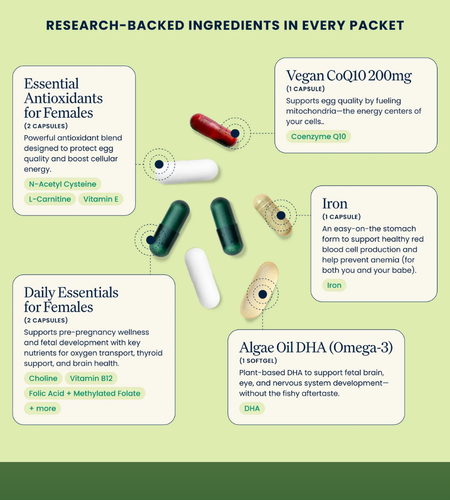
This formula is intended for people preparing to conceive. The listed ingredients include daily essential nutrients, algae-derived DHA, iron, and antioxidant supplements. An optional CoQ10 boost is also available.
This formula may suit preconception needs, but extra antioxidants or CoQ10 aren’t necessary for everyone, and fertility benefits remain uncertain.
Discuss specialized fertility supplements with your healthcare professional, particularly if you are receiving fertility treatment or taking medication.
Pricing, Convenience, and Value
Bird&Be offers one-time purchases and subscription options on selected products. The subscription arrangement may provide a lower listed price and recurring deliveries, while a one-time purchase can be useful if you prefer not to commit to ongoing orders.
Prices vary by product and can change. Before ordering, check the current price, serving duration, shipping eligibility, subscription conditions, and cancellation policy.
Consider value in terms of the nutrients you actually need. A more comprehensive formula is not automatically better if it duplicates nutrients you already obtain through food or other supplements.
Daily sachets may also help organize a routine, but review the number of capsules and the instructions to ensure the format works for you.
Pros and Cons of Prenatal Supplements
Potential advantages
- Convenient access to several essential nutrients.
- Formulas designed for different reproductive stages.
- Options that include DHA and other nutrients that may be missing from an individual’s diet.
- Clearly listed ingredients that can be compared before purchase.
Potential limitations
- Supplements cannot guarantee conception.
- Specialized formulas may cost more than basic prenatal vitamins.
- Some ingredients may be unnecessary or unsuitable for particular individuals.
- Taking multiple products can lead to excessive nutrient intake.
Frequently Asked Questions
When should you start taking prenatal vitamins?
Preconception supplementation can begin before pregnancy. CDC guidance recommends 400 micrograms of folic acid daily for people who could become pregnant. Ask your healthcare professional whether you need a different dose.
Can prenatal vitamins improve fertility?
Prenatal vitamins help address nutritional needs, but they are not a guaranteed fertility treatment. Their primary purpose is nutritional support before and during pregnancy.
Is folic acid the same as folate?
Folate is the general term for vitamin B9, while folic acid is a specific form used in supplements and fortified foods. Folic acid has established evidence for reducing the risk of neural tube defects.
Should you take iron before pregnancy?
That depends on your diet, iron status, and individual needs. Iron is essential, but additional supplementation should be discussed with a healthcare professional to avoid unnecessary intake.
Are Bird&Be supplements suitable for everyone?
Not necessarily. Suitability depends on the specific product, ingredients, medical history, medications, and stage of pregnancy planning. Review the label and seek personalized advice before starting a new supplement.
Conclusion
Preparing for pregnancy starts with understanding your nutritional needs and building healthy habits before conception. Essential nutrients such as folic acid, iron, vitamin D, choline, and DHA play important roles in preconception and pregnancy health, but individual requirements can vary. Choosing prenatal supplements should involve comparing ingredients, dosages, quality information, and overall cost rather than relying on marketing claims alone. Bird&Be offers prenatal and fertility-focused supplement options for different stages of pregnancy planning. Review the product details on the official Bird&Be website and consult a qualified healthcare professional to determine which supplements are appropriate for your needs.